To Play God
The image of Christ in cinema has changed together with cinema itself, and together with the way the twentieth century understood the human being, faith, doubt and suffering. From the almost motionless sacred icon of early Hollywood to the utterly bodily and vulnerable Christ of contemporary cinema – each director created not simply a screen image of Jesus, but their own answer to the question: what does it mean to be Christ – God, victim, revolutionary, or a doubting human being before the face of his own destiny?
In Cecil B. DeMille’s The King of Kings (1927), the Christ played by H. B. Warner still belongs almost entirely to religious iconography. He is not so much a psychological character as an image meant to inspire reverence. He is elevated above those around him; his very presence becomes a miracle. Before us is Christ-as-symbol, almost an icon: the distance between him and the ordinary person is preserved.
A wholly different Christ emerges in Pier Paolo Pasolini’s The Gospel According to St. Matthew (1964). Enrique Irazoqui plays him with austerity and severity. This Christ consoles less than he demands. In him one feels the radicalism of the Gospel word, a challenge to the existing order, an almost revolutionary energy. Pasolini films him without the usual religious ornamentation: Christ turns out to be a man of action and of the word, capable of disturbing the peace of the world.
In Norman Jewison’s Jesus Christ Superstar (1973), another important turn takes place. Ted Neeley’s Christ already belongs to the culture of the 1970s – an age of psychologism, of doubt, of inner crisis. Here what matters is not only the question of who Christ is for others, but of what it means for the human being himself to know himself as Christ. He is vulnerable, tired; he feels fear, irritation and loneliness. The divine mission becomes a psychological burden.
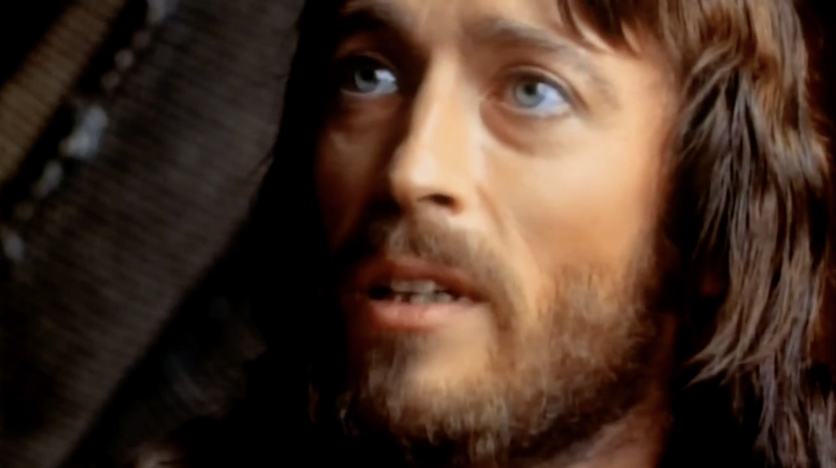
A few years later, Franco Zeffirelli, in Jesus of Nazareth, creates what is perhaps one of the most recognisable and “canonical” images of the screen Christ. Robert Powell plays him calmly and almost with detachment. Here a certain balance is achieved between the human and the divine: Christ is capable of compassion and emotional closeness, yet at the same time remains a figure belonging to another, sacred dimension. This image seems to reconcile traditional iconography with the demands of psychological cinema.
But in Martin Scorsese’s The Last Temptation of Christ (1988), the balance is deliberately broken. Willem Dafoe’s Christ is radically human. He is afraid, he doubts, he tries in anguish to understand his own destiny. At the centre of the film lies the conflict between freedom of choice and predestination. If Christ is deprived in advance of any possibility of refusing his fate, the question arises: what then does his sacrifice mean? Scorsese makes human doubt not the opposite of faith, but the condition of a genuine choice. His Christ is great precisely because he is able to imagine another life – love, family, old age, ordinary human happiness – and still returns to his mission.
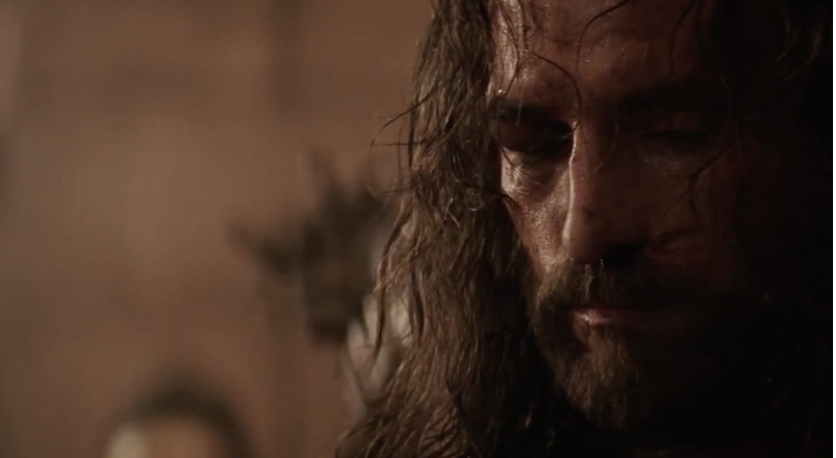
Finally, in Mel Gibson’s The Passion of the Christ (2004), the centre of gravity shifts once again. Here the psychological analysis of Christ’s personality almost disappears, while the body comes to the fore. Jim Caviezel plays Christ above all as a suffering human being and a victim. The film compels the viewer not so much to reflect on suffering as to experience it physically. Bodiliness becomes the main means of evoking empathy: the divine sacrifice is presented through the pain of the human body.
Thus, over a few decades, cinema travels an immense path: from Christ-as-icon to Christ-as-human, from reverent distance to psychological and even physical closeness. Not only the manner of depicting Christ changes, but the very framing of the question. Early cinema asks: how does one show the sacred? Pasolini – how radical was the Gospel word? Jewison and Scorsese – what does a person feel when doomed to be Christ? Gibson – can we, through another’s pain, come closer to the meaning of the sacrifice?
And perhaps this is why the history of the screen Christ turns out to be, at the same time, the history of twentieth-century cinema itself: from symbol to psychology, from icon to body, from certainty to doubt.