
Trilogy: Childhood as a Cinematic Language

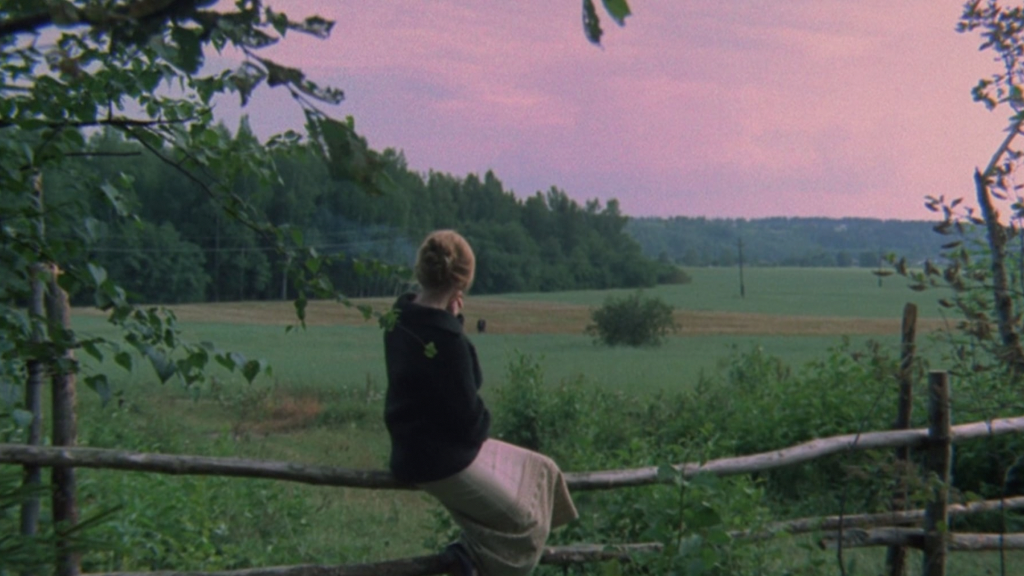
Part 1."Mirror," Andrei Tarkovsky
Tarkovsky’s Mirror is a film-essay, a hybrid of the fictional and the documentary. It is not a plot but an immersion into the director’s consciousness: a stream of memories, thoughts, dreams and associations. Personal biography is interwoven with the history of the country – childhood, the father’s departure, war, the repressions.
The mirror here is a metaphor for consciousness. We do not see the narrator; we hear only his voice, as if he were looking at himself and living his life anew, moving ever further from the surface toward deeper layers of memory, which together create his personality – one that cannot be reflected in any real mirror. The sense of the authenticity of these layers is created by the documentary quality of the fragments: newsreel footage, the poems of the director’s father – the poet Arseny Tarkovsky – read in the poet’s own voice, the appearance of Andrei Tarkovsky’s mother on screen, the doubling of actors (the young mother and the wife are one and the same face), real details of daily life, and the rough, intimate sound that accompanies the seemingly distant events of the inserted novellas.
We reach the root of the problem – the splitting of the family: the parents’ divorce as a trauma that deprives the child of wholeness, and the phrase “I only wanted to be happy” becomes an important metaphor for life’s troubles. The figures of father and mother, in their inability to be together, mirror the narrator’s inability to attain his own wholeness. To “mend” this rupture, one must travel back – to the beginning, to an earthly paradise, when the parents were still together.
For Tarkovsky the film becomes an act of returning to himself – an attempt to join past and present and to recover the lost feeling of happiness. And that means to create a “work of art.” To create Mirror.
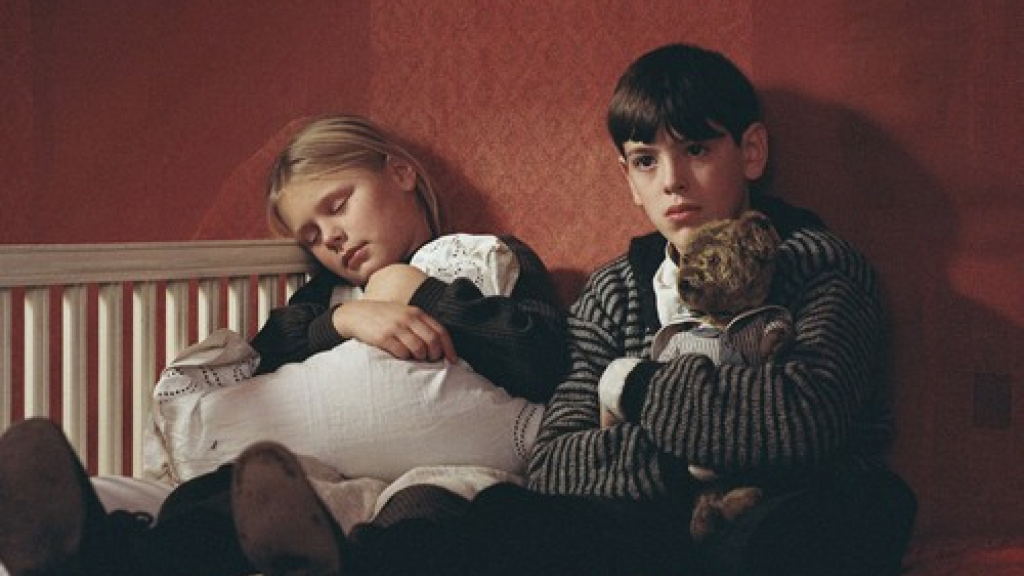
Part 2. "Fanny and Alexander," Ingmar Bergman
This is Ingmar Bergman’s last major film and, in essence, his artistic testament. A story about childhood, but in truth about the birth of an artist and about inner healing.
The world of this film is made up of three distinct spaces. The world of the Ekdahl family – warm, theatrical, full of red curtains, celebrations, illusions. The world of Bishop Vergérus – cold, ascetic: a space of discipline, fear and suppression. The world of Mr Jacobi – a strange in-between space, an antiques shop, a space of magic and theatre on one side, entwined with horror and loneliness on the other. It is through Jacobi’s world that the children are saved, yet it is here too that Alexander comes into contact with mystery and with his own dark power.
Fanny returns to the safe theatrical world of the Ekdahl family. Alexander does not. He remains with the evil he has lived through, with the mystery, and with the ghosts. He is like Hamlet: after the encounter with a shadow it is no longer possible to become who he was. And so an artist is born (Bergman), and with him his own art – not theatre but cinema, in which he tells the story of desires, sins and passions. It is no accident that this film is the last. It is a film of confession and atonement. With it Bergman leaves cinema and moves into “television,” which in itself (a box with a curtain) recalls the puppet theatres of his childhood. Reconciliation has taken place.
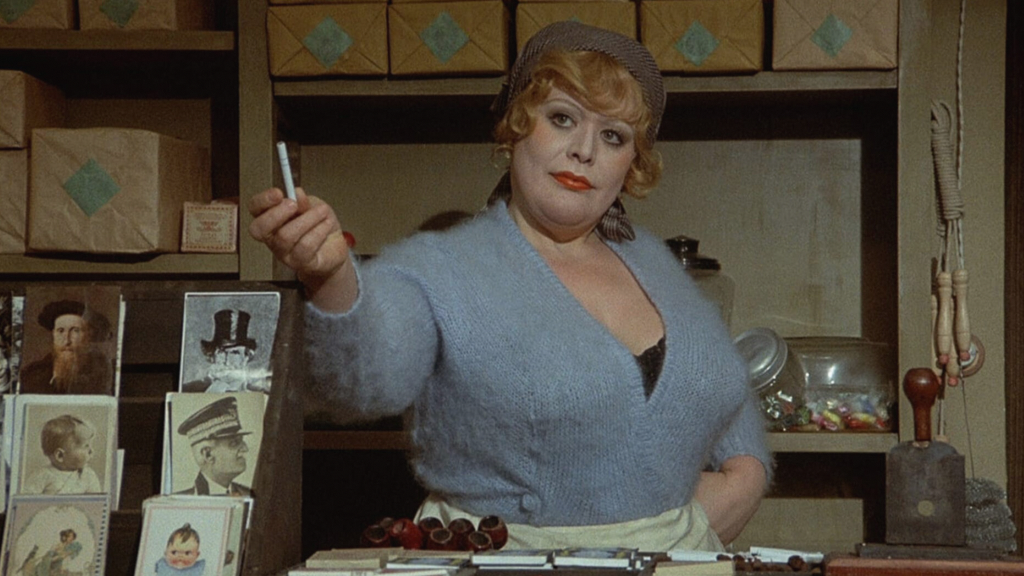
Part 3. Amarcord by Federico Fellini
Fellini, unlike Bergman and Tarkovsky, is not an intellectual preoccupied with reinterpreting life, but a visual artist. For Fellini, childhood is not events (good or bad) but clusters of sensations, summoned again and again. We do not “remember the past” – we relive it here and now. Amarcord is not about “what it’s about,” but about “how it feels.”
The film is built as a stream of episodes that have no logic, only associations and impulses of desire.
Fellini’s central force is the libido (Eros): a desire that does not age or fade but keeps arousing as before. His “child” is the adolescent at puberty and a point of return to the past. But it is an arrival not into an age of innocence, but into the moment of the most intense experience of the body – one’s own and the world’s. At this point all images become passionate, filled with a touching eroticism. Fellini said: “With each film I return to my life as to a fantasy of the past.” In Amarcord the screen becomes a kind of projection of the director’s consciousness.
In Fellini there is no analysis, no trauma, no deep reflection – only a vivid Eros as a possible collective experience raised from the depths of the psyche. But at the same time he reminds us of a certain boundary, where Eros yields to Thanatos. This is death: it appears in the image of the mother. Unlike in Bergman and Tarkovsky, this image is asexual – the mother as Madonna and Angel, a reminder of the limit of the sensory world (the images of Giulietta Masina work the same way in Fellini’s cinema, as does the ending of La Dolce Vita, with the gaze of the caught monster-fish looking straight into the frame). And the final scene of Gradisca’s wedding – that is, her passage into the status of future mother – is accompanied by the coming of a great wind (the wind of history) that sweeps away all the figures of the past on the threshold of the Second World War. Yet the blow of “death” – this source of thought about the self and being, in the spirit of Hamlet – is brief. We have no time to reflect. In Fellini’s world thought slips away like a postponed rendezvous with God. Like an Angel. And we laugh.