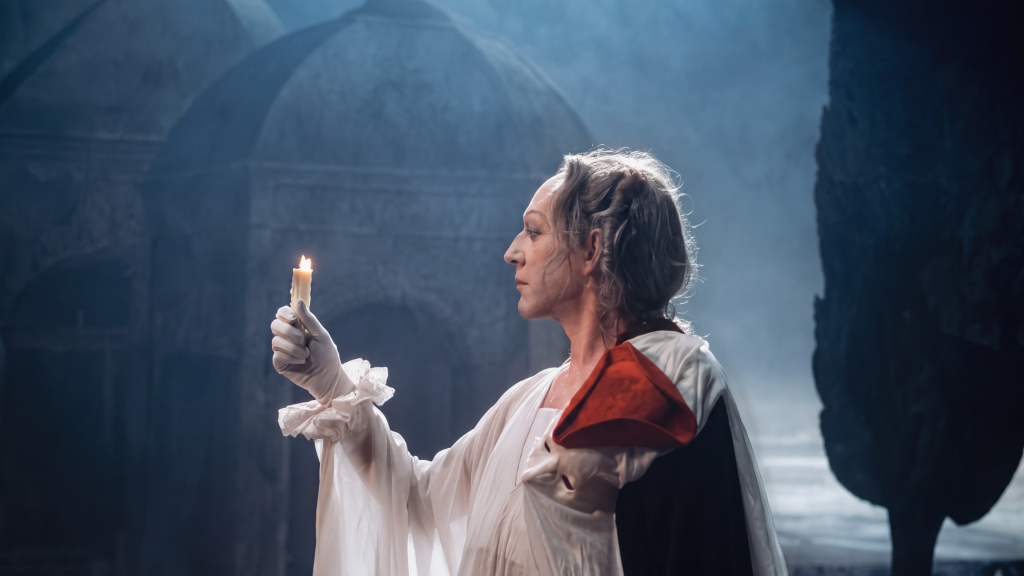
Casanova. Life, Memoirs, Films
In 1821, Brockhaus published Giacomo Casanova’s memoirs in a heavily censored form, fearing that the overly explicit descriptions of sex would shock the public. The memoirs existed in this distorted form until the second half of the 20th century, yet they still exerted a considerable influence on European literature: Balzac, Zola, George Sand and Théophile Gautier all borrowed plots from The Story of My Life. Casanova’s archive, discovered at Dux in 1902, shed light on the author’s personality and dispelled doubts about the memoirs’ authenticity. In 1960 they were finally published in full, uncut, and Casanova came to be spoken of as an underrated writer. A new field of historical study emerged: Casanova studies. The Story of My Life is not only an eyewitness account of the key events of the 18th century but also a vast repository of information about everyday life.
Cinema has turned to the figure of Casanova many times. In the first half of the 20th century, he most often appeared on screen as a cloak-and-dagger hero, a daring adventurer and tireless lover. In the second half, films increasingly turned to the ageing Casanova, a sage and philosopher who had nonetheless not lost his remarkable love of life.
The most significant film about Casanova is Federico Fellini’s Casanova (1976). At first Fellini despises Casanova, almost loathes him. But then he blends himself with him so thoroughly that in the second half of the film he effectively replaces the memoirs with his own complexes and fantasies. Leo Janos, who wrote a report from the set for Time in 1975, mentions a drawing that hung in the dressing room: Fellini and Sutherland run away, each pointing at the other (“It wasn’t me, it was him!”), while above them a furious Casanova threatens them with his sword: “Scoundrels!” Three successive producers, two and a half years of production, a budget unheard of at the time for an auteur film ($10 million), and then a complete box-office flop. Audiences expected a new illustration of the gallant myth and instead got a sea monster with a green tail.
Half a century later, Fellini’s Casanova is a recognised masterpiece, and some consider it perhaps the director’s best film. Well, Casanova himself had to wait much longer for recognition: 140 years.
Other films about Casanova mentioned in the lecture: Casanova (1927, starring Ivan Mosjoukine), The Mysterious Rider (1948, Vittorio Gassman), That Night in Varennes (1982, Marcello Mastroianni), The Return of Casanova (1992, Alain Delon), Young Casanova (2002, Stefano Accorsi), Signs of Love (2006, Maxim Sukhanov).